Information
Model Context Protocol (MCP) in 2026: A Complete Guide for Developers
Understand MCP architecture, the 2026 specification, security boundaries, deployment patterns, testing, and the practical decisions behind production tool integrations.
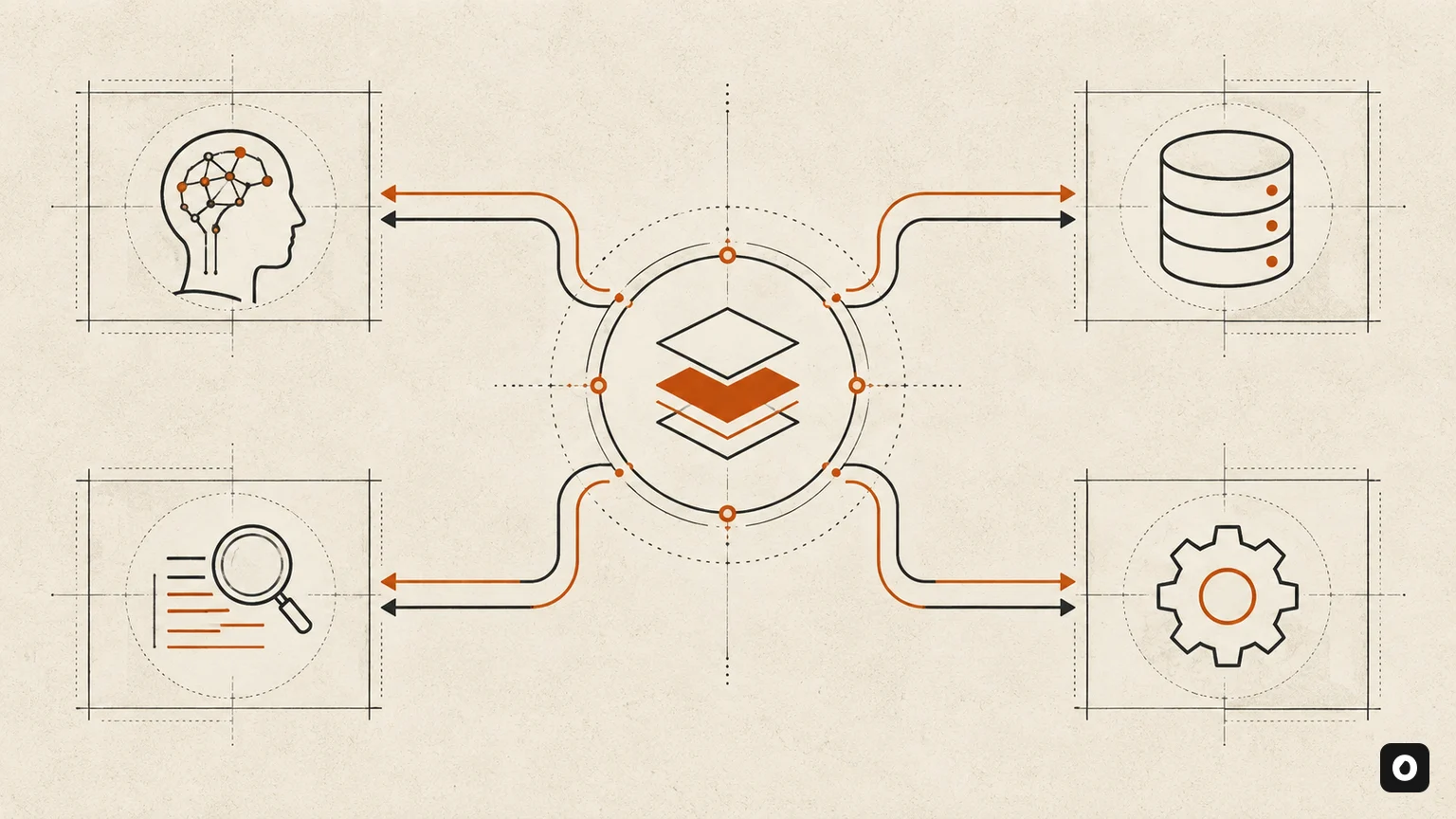
Model Context Protocol has moved from an interesting integration idea to a practical infrastructure standard for AI applications. This guide explains what MCP is, what changed in the 2026 specification, how its architecture works, where it helps, where it does not, and how to design a secure production deployment.
What is the Model Context Protocol?
The Model Context Protocol, usually shortened to MCP, is an open protocol for connecting AI applications to tools, data sources, and reusable prompts through a consistent contract. A model can already produce language, code, or structured output, but useful software normally needs more than generation. It may need to search a knowledge base, read a repository, inspect an issue tracker, query a database, or ask a business system to perform an approved action. MCP standardizes the conversation between the AI host and those external capabilities. Instead of every application inventing a private connector for every service, a client can discover and invoke capabilities exposed by an MCP server.
The useful mental model is a port, not a brain. MCP does not choose the best model, guarantee that a tool is safe, or decide whether an action should be approved. It defines how compatible components describe capabilities and exchange requests and results. The host remains responsible for the model, user experience, permissions, policy, and audit trail. This separation is valuable for teams building on a unified model surface such as the Omega Plus API: model access can evolve independently from the tool layer, while the application keeps a stable boundary around both.
MCP is sometimes described as “USB-C for AI,” but the analogy is incomplete. Physical ports connect known electrical devices; agent tools exchange untrusted, semantic data that may influence future model behavior. An MCP integration is therefore both an interoperability feature and a security boundary. Production teams should evaluate the server operator, scopes, result content, side effects, timeouts, and failure behavior—not merely whether the connection succeeds.
The architecture: host, client, server, and capability
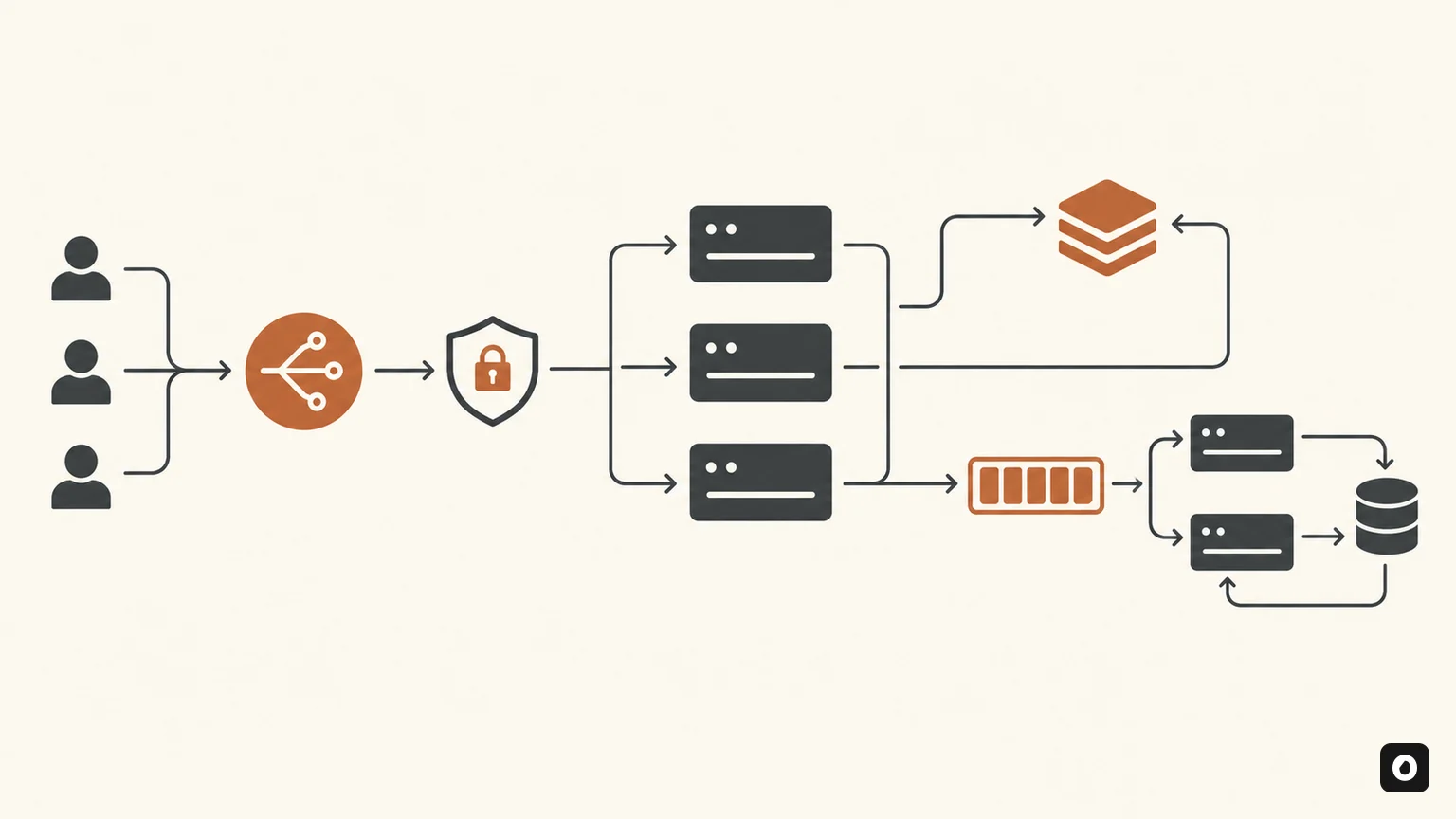
An MCP host is the application in which the user works: a coding agent, desktop assistant, IDE, or company workflow. The host controls the conversation and decides which servers may participate. Inside the host, an MCP client speaks the protocol to a particular server. The server exposes capabilities such as tools, resources, and prompts. A tool represents an operation, a resource represents information that can be read, and a prompt represents reusable interaction guidance. Keeping these roles explicit makes debugging far easier than treating “the agent” as one opaque process.
Consider a repository assistant. The host owns the chat, selected model, approval mode, and user identity. One MCP server may expose source-control operations, another may expose product documentation, and a third may expose incident data. The model sees descriptions of allowed capabilities and can propose calls. The host validates the proposal, asks for approval when required, invokes the relevant client, and returns the result to the model. A terminal experience such as Omega Code can therefore remain repository-aware without hard-coding every external service into its core.
Capability descriptions matter because models select tools semantically. A vague name such as run with an unbounded string argument is harder to use safely than search_incidents with a narrow schema, explicit tenant, maximum result count, and read-only semantics. Good descriptions explain when the tool should be used, required inputs, likely output, side effects, and important exclusions. Schemas should reject invalid values before a downstream system sees them. The best MCP tool resembles a carefully designed public API operation, not a thin wrapper around a shell.
What changed in the 2026-07-28 specification
The 2026-07-28 MCP specification made the protocol core stateless. Protocol-level sessions and the initialization handshake were removed; each request carries the information required to process it, while clients that need capability discovery can use the optional server/discover operation. This matters operationally. Requests can land on any compatible instance behind an ordinary load balancer, and a server no longer needs sticky routing merely to preserve protocol state. Application state may still exist, but it should be represented explicitly rather than hidden inside transport affinity.
The release also added header-based routing for Streamable HTTP, cache hints and deterministic ordering for list results, and Multi Round-Trip Requests for cases in which a tool needs additional user input. A server can indicate that input is required, and the client can repeat the original operation with the answers attached. That design supports confirmation and elicitation without maintaining a permanently open bidirectional channel. Tasks became a formal extension with polling and update operations, giving long-running work a clearer lifecycle.
Authorization received important hardening. The specification introduced issuer validation, issuer-bound credentials, and a direction away from Dynamic Client Registration toward Client ID Metadata Documents. Roots, Sampling, Logging, and the legacy HTTP-plus-SSE transport entered a deprecation path with a minimum transition window. Teams starting a new implementation should target the current specification and Tier 1 SDKs rather than copying an older tutorial. The official 2026 release notes and maintainer roadmap are the appropriate sources for migration decisions.
Why developers care about MCP
The immediate benefit is reduced integration duplication. Without a shared protocol, a team may implement separate adapters for a desktop assistant, a coding agent, an internal support bot, and an automated workflow. Each adapter needs authentication, discovery, error mapping, schemas, and lifecycle management. With MCP, the same capability can be surfaced to multiple compatible hosts. The business logic still needs engineering, but the edge between host and service becomes reusable and testable.
The second benefit is replaceability. An application that treats model inference, tool connectivity, retrieval, and user interface as separate layers can change one without rebuilding all four. Developers can review the available Omega Plus models for a workload while preserving the same capability server. A search implementation might later move from one index to another while keeping the tool schema stable. Modularity does not eliminate migrations, but it confines them to deliberate boundaries.
The third benefit is ecosystem discovery. A well-described server makes its capabilities visible to clients without a bespoke graphical menu for each function. This is especially helpful for specialized or internal tools whose value depends on context. It also creates a new design responsibility: discovery must be progressive. Sending hundreds of tool definitions into every prompt wastes context and can reduce selection accuracy. The MCP roadmap explicitly recognizes this scaling problem and is exploring ways to reveal a smaller surface first, then disclose more as the task narrows.
Tools, resources, prompts, and tasks
Tools are callable operations. They can be read-only, such as searching invoices, or state-changing, such as creating a support ticket. Resources expose data that a client can read and place into context. Prompts package reusable instructions or starting points. Tasks represent work that may outlive a single request. Although these primitives share a protocol, they should not be treated as interchangeable. An operation with side effects needs stronger confirmation and idempotency controls than a document read.
A useful design exercise is to classify every capability along four axes: data sensitivity, side-effect level, reversibility, and expected duration. Reading a public product catalog is low sensitivity and read-only. Exporting customer records is sensitive but may still be read-only. Sending a refund changes state and carries financial impact. Re-indexing a knowledge base may take minutes. These differences should shape scopes, approval prompts, timeout policy, logging, and whether the work belongs in a task. The planned Omega Plus MCP Tools layer is organized around this principle: connectors should expose deliberate capabilities, not unrestricted access.
Results deserve the same design care as inputs. Return only the fields needed for the next decision. Large raw payloads consume context, complicate privacy review, and invite prompt injection hidden in remote content. Prefer stable structured results with a short summary, typed records, pagination, and opaque continuation handles. When a model needs a full artifact, offer a separate resource read rather than attaching everything to the first tool response.
Security is part of the protocol boundary
An MCP server can bridge a probabilistic model to systems that hold credentials, customer data, and real authority. That bridge must assume that tool arguments can be mistaken, malicious, or induced by untrusted content. Validate every argument server-side. Enforce tenant isolation using authenticated identity, not a tenant name supplied by the model. Apply least-privilege scopes. Put high-impact actions behind explicit approval and show the user the exact operation, target, and material effect before execution.
Prompt injection is especially important when resources contain third-party text. A retrieved page can instruct the model to ignore policy, reveal secrets, or call a tool. The content is data, not authority. Hosts should distinguish system instructions from retrieved text, limit which tools are available during untrusted browsing, and require deterministic checks for sensitive actions. The forthcoming Omega Secure privacy layer is intended for this kind of boundary: controlling what enters an AI workflow and enforcing policy around sensitive data. Until such a layer is available, teams must implement equivalent controls in their own host and server.
Credentials should never be returned to the model. Store secrets in a vault, exchange them at the server boundary, rotate them, and log access without recording the secret itself. Prefer short-lived credentials and issuer-bound authorization over pasted long-lived tokens. For local servers, remember that local does not automatically mean trusted: installation packages, update channels, filesystem scope, and child processes all require review. For remote servers, verify the operator, transport security, data handling, retention policy, and jurisdiction.
Reliability, timeouts, and idempotency
Tool calls fail for ordinary distributed-systems reasons: networks time out, upstream APIs throttle, credentials expire, schemas change, and workers restart. A model may respond to an ambiguous failure by trying again, which turns a harmless timeout into a duplicated purchase or ticket. State-changing operations should accept an idempotency key tied to the logical action. Servers should return structured error categories such as invalid input, unauthenticated, forbidden, throttled, temporary dependency failure, or permanent business rejection.
Set time budgets at every layer. The host needs a user-facing deadline; the MCP client needs a transport deadline; the server needs deadlines for its dependencies. A task that cannot reliably finish within the interactive budget should return a durable handle and continue asynchronously. Cancellation should propagate when the user stops the run. Retries should be bounded, use backoff and jitter, and only repeat operations known to be safe. These practices matter more than the cleverness of an agent loop.
Observe the complete path. Record a correlation ID, capability name, sanitized argument shape, authorization outcome, queue time, execution time, result size, and final status. Do not place private payloads into general logs. Track p50, p95, and p99 latency; failure and retry rates; approval rejection; duplicate suppression; and cost per completed objective. An MCP deployment is healthy when users complete work predictably, not merely when the server returns HTTP 200.
MCP and retrieval-augmented generation
MCP and retrieval-augmented generation solve related but different problems. RAG selects relevant information and places it into a model’s working context. MCP defines a way for a host to access capabilities, one of which may be retrieval. A retrieval server might expose search, fetch, citation, and feedback tools. It still needs an ingestion pipeline, permissions, chunking strategy, ranking, freshness rules, and evaluation. Connecting a vector database through MCP does not automatically make answers grounded.
For knowledge applications, preserve provenance. Search results should identify the source, version, owner, timestamp, and permission decision. The final answer should cite evidence that actually supports the claim. Evaluate retrieval separately from generation: first determine whether the correct evidence was found, then whether the model used it faithfully. Omega Bhaskar is being developed as the retrieval framework within the ecosystem, while MCP provides a potential connector boundary around knowledge operations.
Avoid placing an entire corpus or enormous tool result into the prompt. Context windows are finite, attention is not uniform, and irrelevant text can reduce answer quality. Retrieve narrowly, compress carefully, and allow the model to request deeper evidence when necessary. Cache stable search metadata, but include content versioning so a changed document cannot silently reuse stale results.
Local, remote, and gateway deployment patterns
A local stdio server is attractive for developer tools because it can work with files and processes on the user’s machine. Its trust boundary is the local account, and its main risks include over-broad filesystem access, unsafe command execution, and supply-chain compromise. A remote Streamable HTTP server centralizes updates, governance, and observability, but it introduces network reliability and a stronger identity requirement. Neither pattern is universally safer; the right answer depends on the capability and data location.
A gateway pattern places routing, authentication, policy, rate limits, and telemetry before multiple servers. The 2026 specification’s self-describing requests and routing headers make that pattern easier. Gateways should not become an invisible superuser. Preserve downstream scopes, propagate caller identity securely, and make policy decisions explainable. If tools are later deployed across environments, an Omega Cloud deployment layer could provide a coherent operational surface; it is currently an in-development product rather than a generally available promise.
Hybrid deployments are common. A coding host may use local tools for the repository, a remote server for issue tracking, and a company gateway for private knowledge. Model inference can remain behind the Omega Plus Messages API, separate from those tool transports. This topology reduces coupling but raises the importance of shared correlation IDs and consistent errors, because one user action crosses several systems.
A practical implementation checklist
- Define the user objective and decide whether a tool is necessary.
- Design narrow capability names, descriptions, and JSON schemas.
- Classify sensitivity, side effects, reversibility, and duration.
- Choose local or remote transport based on where authority and data live.
- Implement identity, least privilege, tenant isolation, and explicit approval.
- Validate arguments and sanitize results before model exposure.
- Add idempotency, deadlines, cancellation, bounded retries, and structured errors.
- Test with multiple compatible clients and adversarial content.
- Measure completion quality, latency, failures, cost, and user rejection.
- Document ownership, version support, deprecation, and incident response.
Start with one read-only capability that solves a repeated problem. Test it manually, then with realistic model behavior, then with users. Add write operations only after the team understands discovery, permissions, and failure handling. This progression is less exciting than connecting dozens of services in a demo, but it produces a foundation that can be trusted. Composability works when every component has a clear contract.
How to test an MCP integration
Protocol conformance is the starting point, not the finish line. Test discovery, argument validation, result types, version negotiation, cancellation, and authentication using the official SDK behavior. Then add contract tests for every capability. A contract test should prove that required fields are enforced, unknown fields are handled intentionally, permission boundaries cannot be bypassed, and the result keeps its documented shape. Run these tests whenever the server or its downstream API changes.
Next, test the host and model together with a representative task set. Include requests that should select the tool, requests that should not, similar tools that could be confused, missing parameters, malicious instructions inside retrieved content, and operations requiring approval. Record whether the model chose correctly, supplied valid arguments, interpreted the result faithfully, and stopped at the right time. Test more than one model if the application exposes a selectable catalog, because capability selection can vary even when the wire protocol is identical.
Finally, exercise production failure conditions in a safe environment. Inject latency, throttling, truncated responses, expired credentials, unavailable dependencies, and repeated deliveries. Disconnect the client during a long task and confirm that cancellation or resumption behaves as documented. Redact logs and inspect them as if they were part of an incident investigation. A useful test suite proves not only that a capability works, but also that it fails within a bounded, understandable, and recoverable state.
Common mistakes to avoid
The first mistake is exposing a giant generic tool. It appears flexible but transfers validation and policy into a probabilistic prompt. The second is loading every tool on every turn. Discovery overhead consumes context and increases confusion. The third is granting a server the user’s full authority when the task needs only a read scope. The fourth is logging raw arguments and results. The fifth is treating a model-generated confirmation sentence as the same thing as a deterministic user approval event.
Another mistake is evaluating only happy paths. Test expired credentials, malformed schemas, repeated requests, cancellation, partial downstream success, network disconnects, and hostile retrieved content. Verify that a tool result cannot impersonate a system instruction. Confirm that the host displays the real target before a destructive action. Ensure that errors remain actionable without revealing secrets. Reliability and security emerge from these unglamorous cases.
Finally, avoid presenting MCP as a replacement for product design. Users still need understandable controls, useful defaults, feedback, and recovery. A connector does not tell a user why an agent chose an action or how to undo it. Protocol adoption succeeds when it disappears into a trustworthy experience.
Where MCP is heading
The maintainer roadmap emphasizes agentic messaging, HTTP-native transport, agent identity, improved result contracts, progressive tool discovery, and better SDK ergonomics. These priorities reflect production pressure: agents run longer, tool catalogs grow, cloud workloads need identities independent of an interactive browser, and organizations need consistent governance. The protocol will continue to change, so applications should negotiate versions and isolate protocol adapters from business logic.
MCP’s long-term significance is not that every AI product will look the same. It is that useful capabilities can become portable across hosts while maintaining explicit boundaries. Open protocols let model providers, application builders, tool authors, and infrastructure teams innovate independently. The strongest implementations will combine that openness with disciplined authorization, evaluation, and observability.
Frequently asked questions
Does MCP replace an LLM API?
No. An LLM API provides inference; MCP connects a host to tools and context. A product may use both, such as an Omega model accessed through the API plus MCP servers for external capabilities.
Does MCP make tool calls safe automatically?
No. The protocol supplies structure, not trust. Hosts and servers still need validation, scopes, approvals, isolation, logging, and prompt-injection defenses.
Should every integration become an MCP server?
No. A direct internal function may be simpler when only one application needs it. MCP becomes valuable when capability portability, independent deployment, standardized discovery, or multiple compatible hosts justify the boundary.
Can MCP support long-running jobs?
Yes. The Tasks extension provides a clearer lifecycle for asynchronous work, and Multi Round-Trip Requests support additional input without relying on a permanently open bidirectional session.
Is the legacy SSE transport the best starting point?
No. New implementations should follow the current specification and SDK guidance. The 2026 release deprecated the legacy HTTP-plus-SSE transport with a transition period.